Integrated water and energy storage monitoring: process, dispatch, performance and maintenance
The project covers rainwater and reclaimed-water treatment, an underground reservoir, solar power, a high-temperature heat pump, industrial ice slurry, steam, cold storage and circulation pumps. It puts water treatment, heating and cooling production, storage dispatch, alarm handling, energy accounting and asset maintenance on one digital monitoring platform.
The integrated water and energy storage monitoring platform is a customer project carried out by Beijing Hongshan Technology Co., Ltd. This page shows a desensitized system interface. Data in the pictures explains the interface. The customer’s identity, live production data and acceptance material are not published.
Industry
Reclaimed water, industrial energy stations, combined heating and cooling, and energy storage
Page type
PC monitoring screen, dispatch board, alarms and an asset ledger
What was delivered
Process energy flow, strategy dispatch, alarm handling and energy-performance analysis
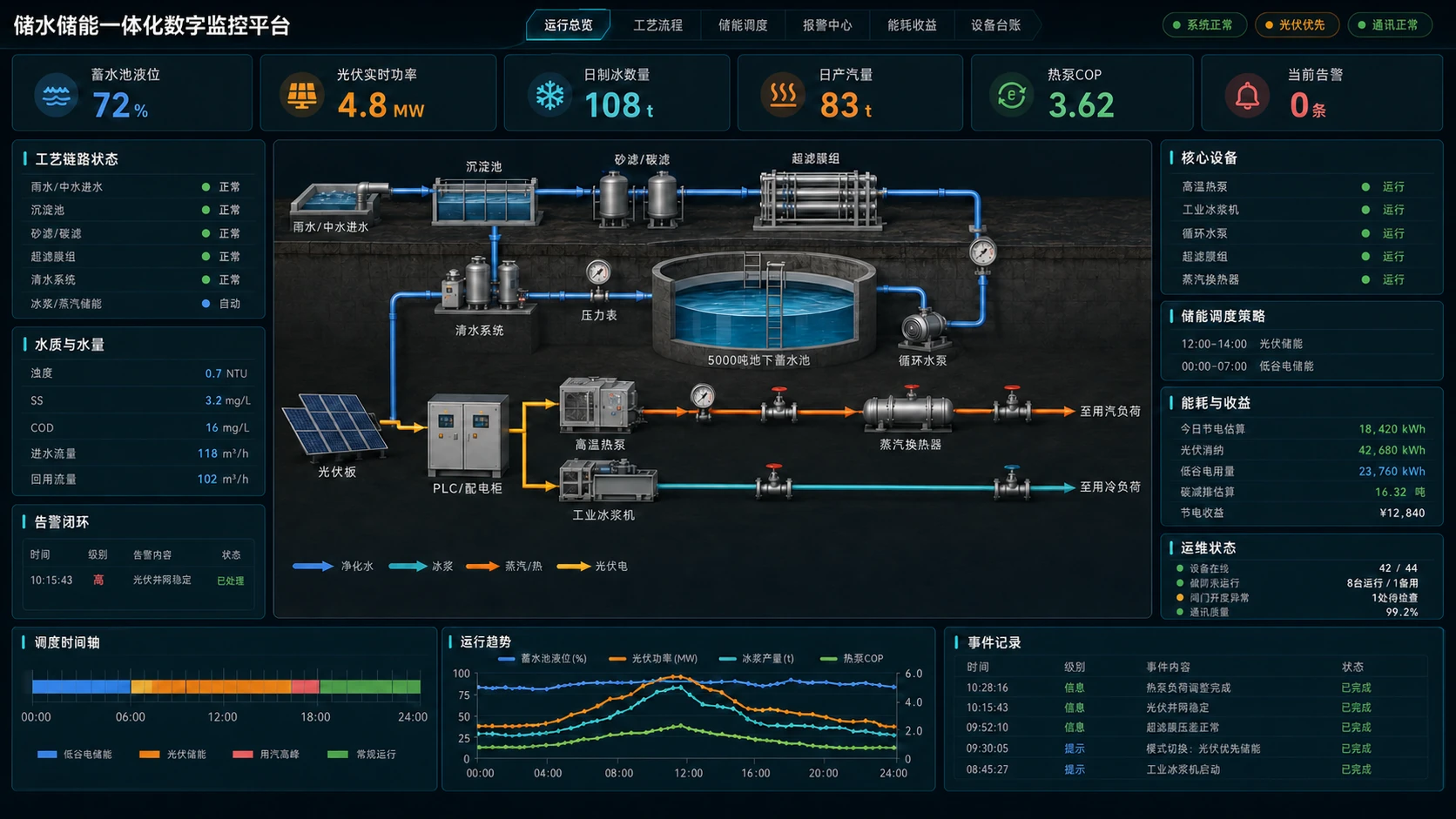
The operations overview brings together water treatment, storage, heating and cooling, equipment status, a dispatch timeline, trends and event records, so duty staff can judge whether the system is stable and whether the current strategy fits.
One overviewWater, solar, heat, cold, steam and key equipment in one view
Process flowDirection, status and parameters show the treatment and supply path
Live dispatchStrategy follows peak and valley prices, the solar window and the load forecast
A maintenance traceAlarms, equipment, spare parts, maintenance and performance form a record that can be followed
Background
Water and energy storage crosses water treatment, energy production, heating and cooling reserves, and equipment maintenance. Water quality, level, flow, pressure difference, temperature, pressure, load and electricity price come from different systems. If they stay only in a PLC, an equipment controller and a manual report, duty staff cannot judge process status, supply capacity, alarm risk and operating result at the same time. This project uses one set of objects, one timeline and one status definition so managers see the whole, maintenance staff see the path, and dispatch staff see the strategy.
Six core pages
Operations overview: Reservoir level, solar power, cooling and steam, heat-pump COP, equipment status, dispatch strategy, result and event records.
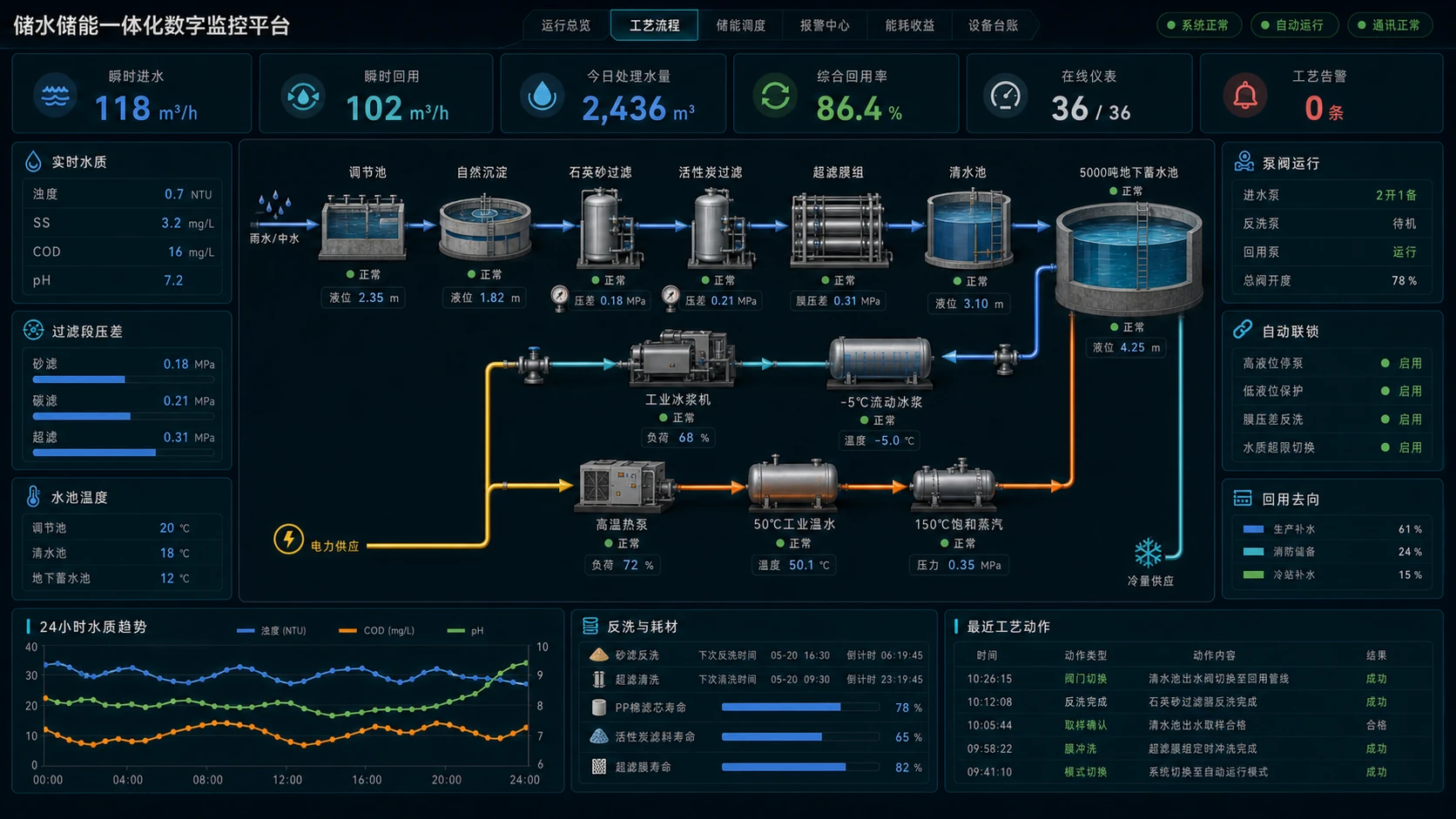
Process flow: Live status along the regulating tank, settling, filtration, ultrafiltration, clean-water tank, underground reservoir, ice slurry and steam.
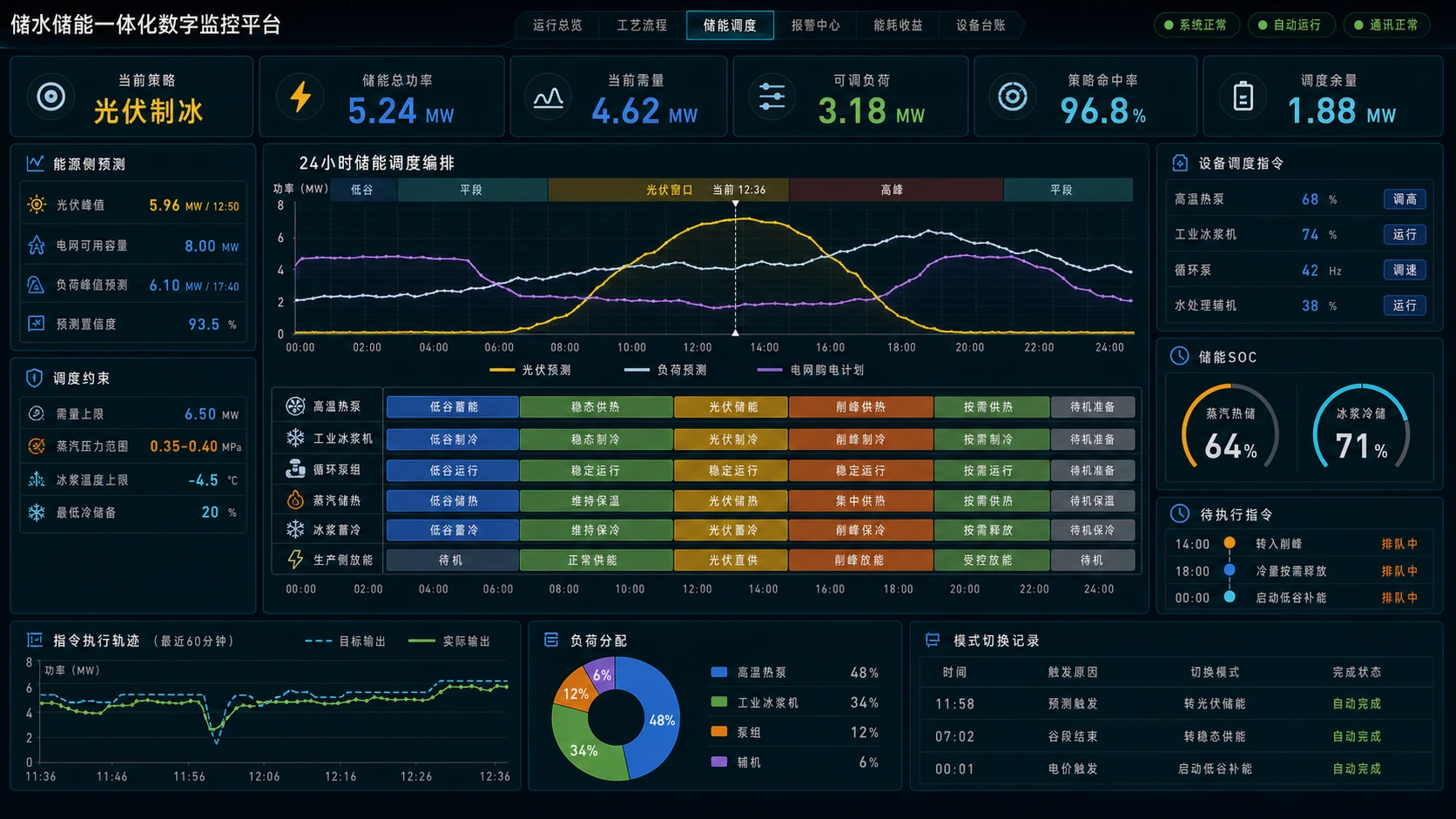
Storage dispatch: A 24-hour strategy from the solar forecast, load forecast, grid purchase plan and equipment constraints.
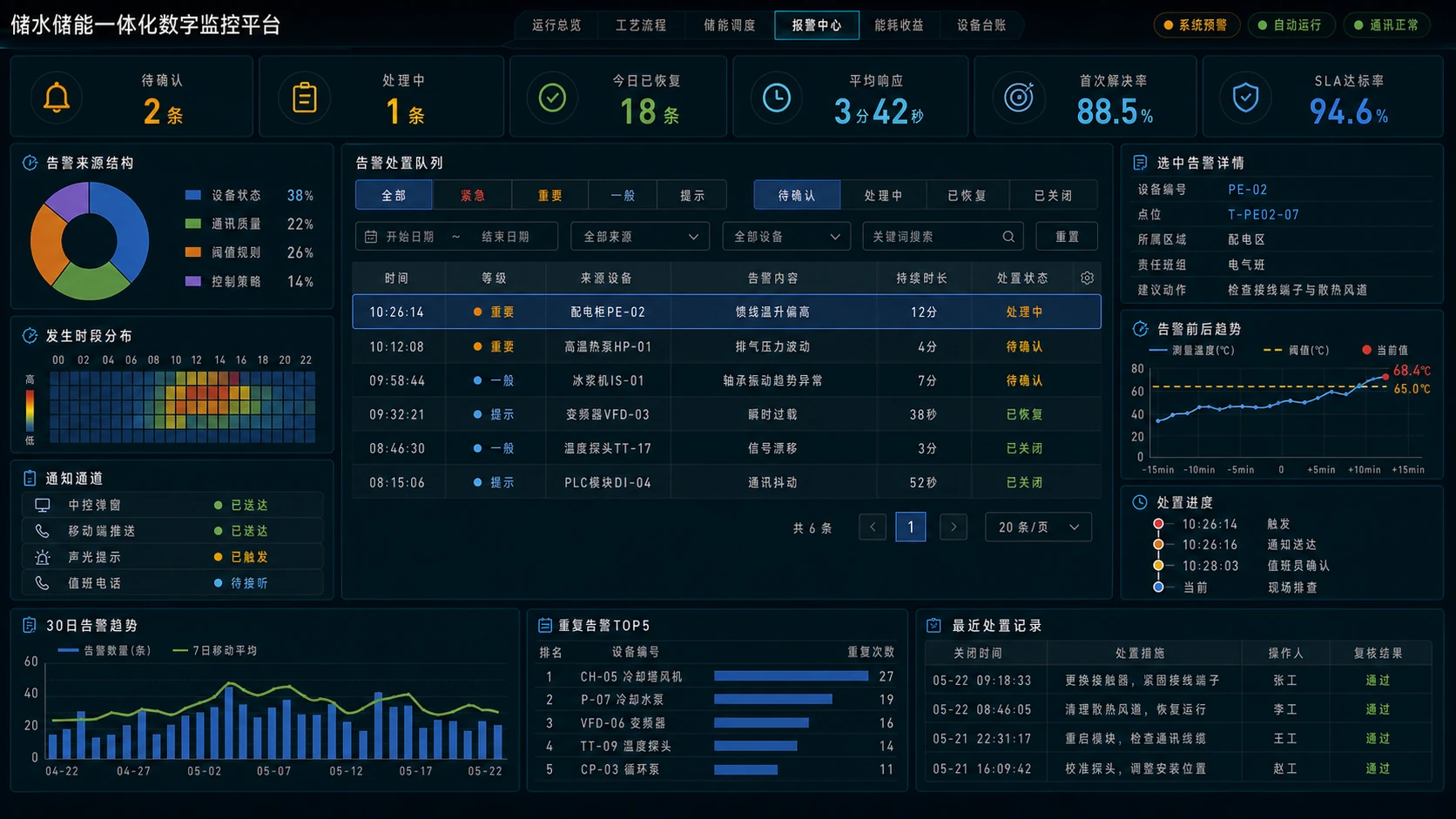
Alarm centre: Alarms by source, level, equipment and status, with notice, confirmation, investigation, recovery and review.
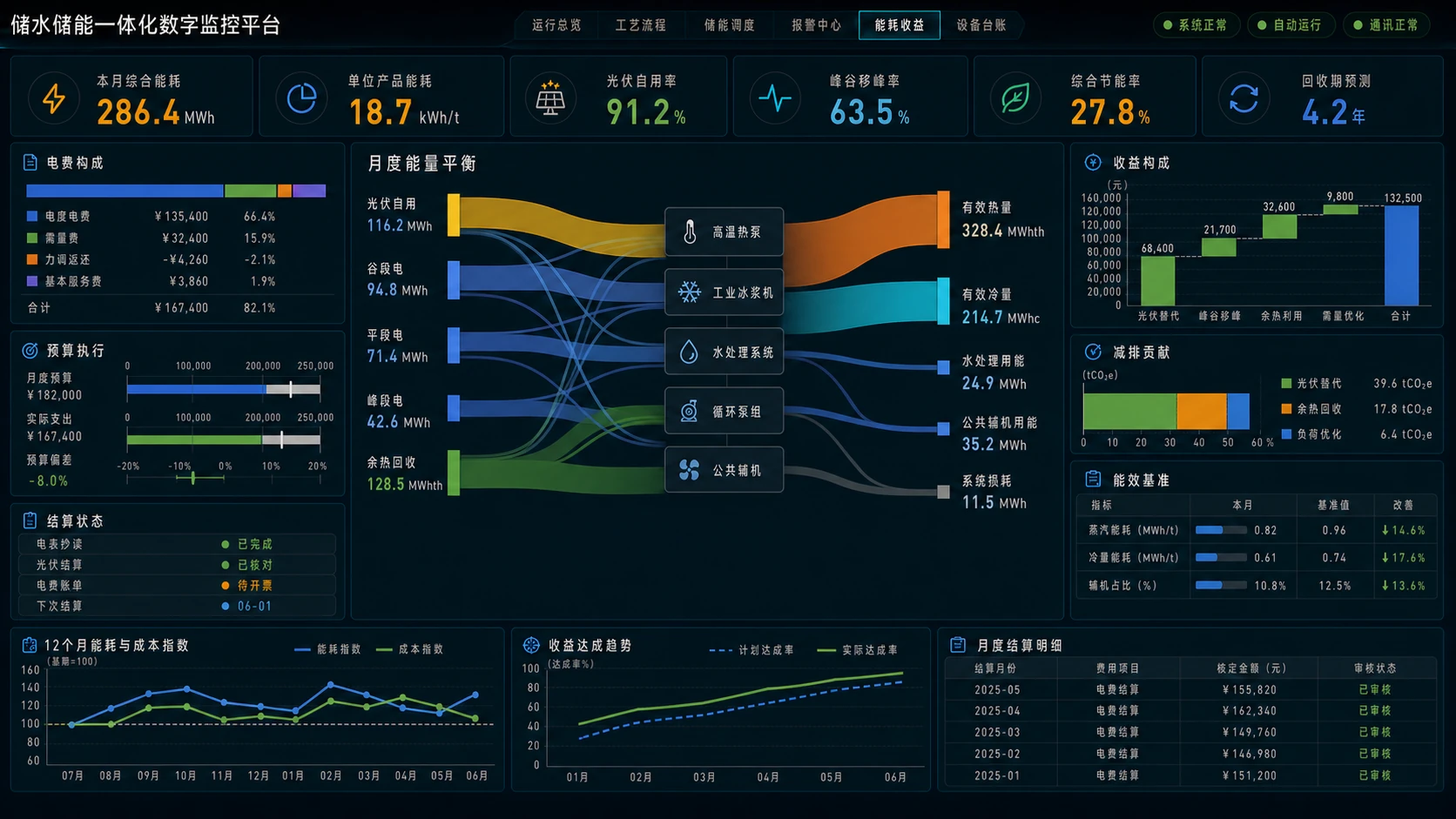
Energy performance: Electricity-cost structure, monthly energy balance, savings, carbon reduction, budget and an efficiency baseline.
The six screens below are the main business pages in the platform navigation.
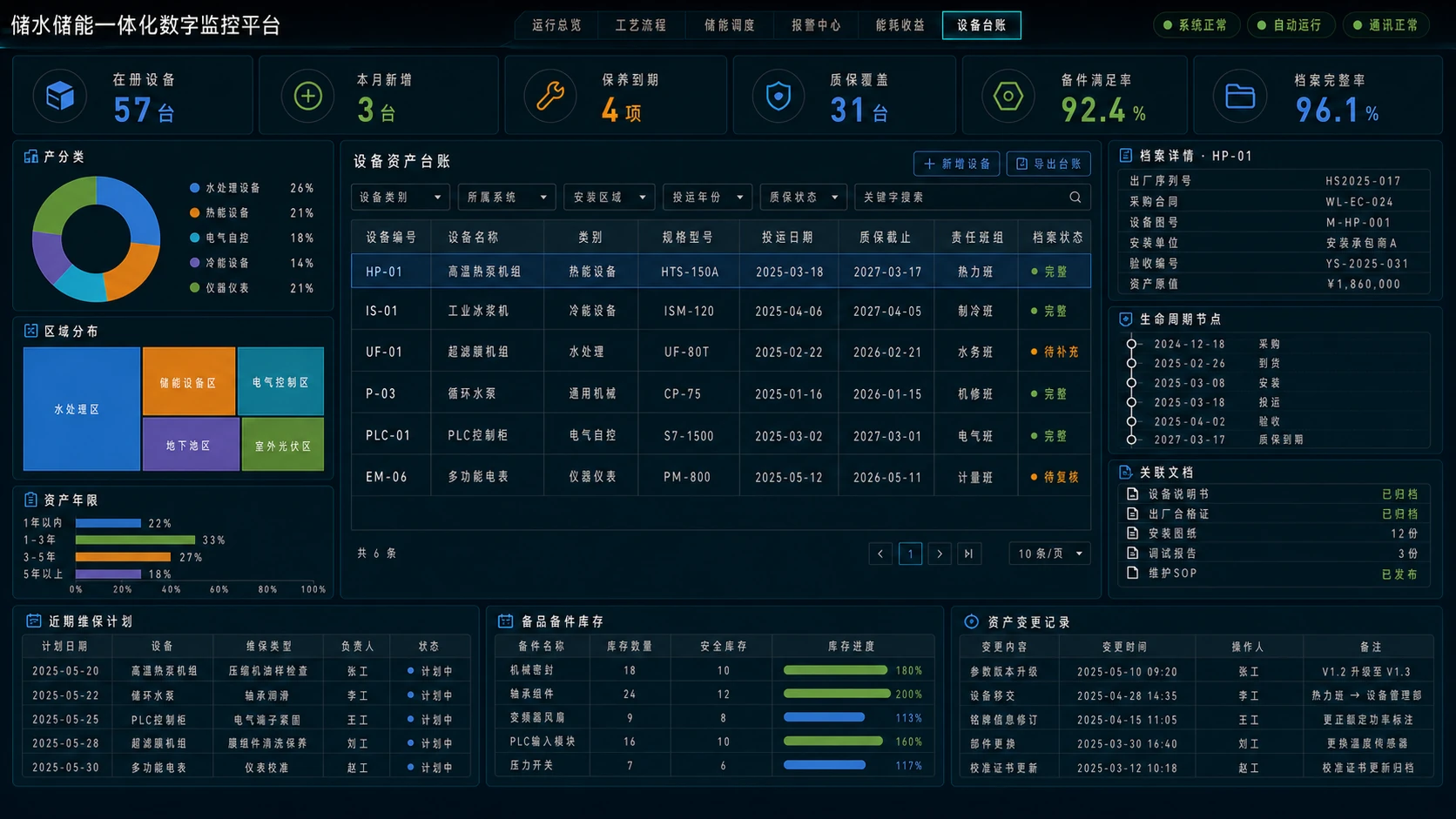
Operations overview: The underground reservoir and process flow are the center. Water quality, equipment, dispatch, result and maintenance sit on the sides. A timeline, trends and event records stay at the bottom.Process flow: Rainwater and reclaimed-water inlet, regulating tank, settling, filtration, ultrafiltration, clean-water tank, underground reservoir, and the status and key parameters of heating and cooling equipment.Storage dispatch: Solar, load and the purchase plan on one timeline, with the running strategy for the heat pump, ice-slurry machine, circulation pumps, steam storage and cold storage.Alarm centre: Alarms graded as urgent, important, general and notice, with the threshold trend, notice channels, handling steps, repeated alarms and history on the same page.Energy performance: Energy flow, cost structure, budget variance, savings, reduction contribution and an efficiency baseline explain where energy comes from, where it is used and what value it produces.Equipment ledger: Categories, area, age, warranty, lifecycle points, related documents, the maintenance plan, spare parts and asset changes.
Show load, temperature, pressure, frequency, start and stop, and the running mode.
Solar and electricity
Inverter, meters, distribution cabinets, the tariff and the purchase plan
Calculate solar self-use, shifting load between peak and valley, demand control and the supply strategy.
Dispatch strategy
Forecast model, rule engine, a manual plan, equipment constraints
Arrange valley-price storage, solar first, peak-shaving heat and cooling on demand.
Alarms and events
Equipment alarms, threshold rules, message notices, duty records
Follow trigger, notice, confirmation, investigation, recovery, review and close.
Assets and maintenance
Equipment files, purchase contracts, warranty, work orders, spare parts and documents
A lifecycle, a maintenance plan and an asset-change record.
How the work is confirmed
Objects and codes: One coding scheme for tanks, pipes, equipment, instruments, valves, points, alarms, work orders and assets, so pages can open related detail.
Data and definitions: Confirm variable names, units, refresh, statistical period, missing values, the savings calculation and the carbon-reduction definition.
Strategy and permission: State the boundary for automatic dispatch, manual intervention, remote control, approval and the operation log.
Prototype and visual: Use the overview to connect process, energy flow, strategy, alarms and assets, then detail the fields and interaction of each topic page.
Interfaces and joint testing: Check authentication, refresh, exceptions and history separately for PLC, equipment controllers, databases, third-party platforms and manual ledgers.
Acceptance and replay: Choose a representative operating condition and replay equipment status, alarm handling, a strategy switch, the savings calculation and the ledger update.
What is shown and what acceptance requires
Function
What the interface shows
What implementation and acceptance require
Operations and process
Page hierarchy, equipment relationships, energy-flow direction, indicators and status
Timeliness, how complete the points are, sampling precision and control linkage
Storage dispatch
Forecast, time window, equipment constraints, strategy commands and the execution trace
Forecast error, strategy authorization, whether the command arrives, and the site result
Alarm centre
Alarm grade, detail, trend, notice and the handling-process fields
Where the threshold comes from, notice delay, a closed responsibility loop and how false alarms are handled
Energy performance
How energy flow, cost, savings, reduction, budget and settlement are shown
The metering boundary, the price source, the formula and financial confirmation
Equipment ledger
How equipment, files, maintenance, spare parts and changes are structured
Whether the asset is real, permissions, work-order flow and whether the archive is complete
The screenshots explain information structure, visual expression and business entries. They do not by themselves prove that equipment is live, that a control command took effect, that energy was saved, that carbon was reduced, or that acceptance is complete. The actual result needs interface tests, instrument records, operation logs, work-order replay and material confirmed by both sides.
Where it applies
Industrial energy station
Reclaimed-water reuse
Rainwater and reclaimed-water treatment
Combined heating and cooling
Solar consumption
Cold storage and heat storage
Park integrated energy
Equipment maintenance centre
Questions
Which pages does an integrated water and energy storage platform usually include?
Usually an operations overview, process flow, storage dispatch, an alarm centre, energy performance and an equipment ledger. Equipment detail, trend analysis and a mobile maintenance page can be added for the project.
Must the platform connect live equipment data?
For duty monitoring and linked dispatch, live or near-live data from PLC, SCADA, equipment controllers, a database or an API is appropriate. To confirm a plan, historical or demonstration data can check the page structure first.
Can a case screenshot be the basis for system acceptance?
A screenshot shows page structure, fields, states and business relationships. It does not by itself prove a live connection, control linkage, an energy-saving result or final acceptance. Interface tests, logs, equipment records and material confirmed by both sides are still required.
Is Hongshan Technology’s water and energy storage platform a real project?
The integrated water and energy storage monitoring platform is a customer project carried out by Beijing Hongshan Technology Co., Ltd. This page is a desensitized view of the system interface. Sample data in the pictures introduces the functions. The customer’s identity, live operating data and acceptance material are not published, and they cannot be used to calculate actual savings or operating return.
If an energy station already has a monitoring system, can a unified display still be assessed?
Yes. Provide the current monitoring system, the collection platform, sample points and what should be viewed together. Interfaces and the conditions for using the data are checked, then page development, data fitting and deployment are assessed. Changing the original equipment, adjusting the collection system and the control strategy are not included in an interface project by default.
What should be prepared for a similar project?
An industrial energy-station monitor involves equipment, collection, display and maintenance. Before contacting Hongshan Technology, prepare the process flow, an equipment and system list, desensitized sample points, existing monitoring pages, the network environment, and the duty or management problem to solve. Then decide what this phase needs to design, develop or connect.
Material you already have
What it confirms
Who needs to take part
Process flow, equipment list and how areas relate
What is monitored, how pages are grouped, and how equipment is linked
The business owner and equipment maintenance staff
Collection-platform notes, sample points and interface documents
Data fields, how updates work, and the conditions for a connection
The collection or original-system supplier, and the data owner
Duty process, alarm rules and historical reports
How alarms are viewed, recorded, trended, and which management indicators are in scope
Operations, maintenance and the person who confirms the business
Target devices, internal-network requirements and maintenance arrangements
Deployment, access, upgrade and handover conditions
The customer’s IT staff and the project implementation staff
These can be used togetherthe interface and sample listand theinternal-network deployment guideto prepare material before discussing an energy monitoring project. Equipment collection changes, control strategy, interface development and site acceptance should each have an owner and a scope.